

Psoriasis is a chronic autoimmune disease that causes skin cells to grow too quickly. This rapid growth leads to the buildup of thick, scaly patches on the skin. While not contagious, it can be uncomfortable and have a significant impact on a person’s quality of life.
Types of Psoriasis
There are several different types, including:
-
- Plaque psoriasis: The most common type, characterized by dry, itchy raised, patches covered with white or silvery scales. There may be few or many. They usually appear on the elbows, knees, lower back and scalp. The patches vary in color, depending on skin color.
-
- Guttate psoriasis: Occurs suddenly, often after a strep throat infection, and appears as small, drop-like lesions.
-
- Inverse psoriasis: Affects skin folds, such as the armpits, groin, and under the breasts.
-
- Pustular psoriasis: Causes pus-filled blisters on the skin.
-
- Erythrodermic psoriasis: Covers most of the body with a red, peeling rash.
-
- Psoriatic arthritis: Affects the joints, causing pain, stiffness, and swelling.
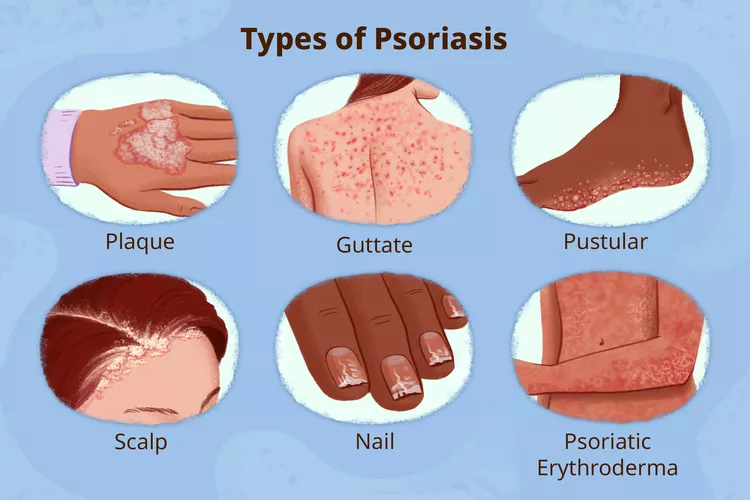
Illustration from VeryWell Health
Symptoms of Psoriasis
Symptoms can vary depending on the type and severity of the condition. Common symptoms include:
-
- Red, scaly patches on the skin
-
- Itching, burning, or soreness
-
- Dry, cracked skin that may bleed
-
- Thickened nails
-
- Joint pain and stiffness (in psoriatic arthritis)
Causes
The exact cause of psoriasis is unknown, but it is believed to be related to an overactive immune system. A strong family history is the most significant risk factor. However, triggers that can worsen psoriasis symptoms include:
-
- Infections, such as strep throat
-
- Increased stress
-
- Injury to the skin
-
- Certain medications, such as some antihypertensive medications, lithium, and antimalaria drugs
-
- Smoking, including exposure to secondhand smoke
-
- Rapid withdrawal of oral or injected corticosteroids
Treatment Options
There is no cure, but there are several treatments available to manage symptoms and improve the appearance of the skin. These include:
-
- Topical medications: Creams, ointments, and lotions applied directly to the skin.
-
- Light therapy: Exposure to ultraviolet light to slow down skin cell growth.
-
- Systemic medications: Oral or injected medications that work throughout the body.
-
- Biologic medications: Newer medications that target specific parts of the immune system.
-
- Lifestyle changes: Managing stress, avoiding triggers, and maintaining a healthy diet can also help.
Living with Psoriasis
Psoriasis can be a challenging condition to live with, but with proper management and support, it is possible to manage symptoms and maintain a good quality of life.
-
- Connect with others: Joining a support group can provide valuable emotional support and practical advice.
-
- Educate yourself: Learn about psoriasis and the different treatment options available.
-
- Take care of your skin: Moisturize regularly, avoid harsh soaps and chemicals, and protect your skin from the sun.
-
- Manage stress: Techniques like meditation, yoga, or deep breathing can help reduce stress levels.
-
- Eat a healthy diet: A balanced diet can help to support overall health and well-being.
-
- Regular exercise: Physical activity can help manage stress and improve mood.



Leave a Reply